Feeling the Flavour: Exploring Children's Touch–Taste Cross-sensory Correspondences and Willingness to Try Unknown Foods for Child–Food Interaction Design
2026. Proceedings of the 2026 CHI Conference on Human Factors in Computing Systems.
Priscilla Lo, Tegan Roberts-Morgan, Matthew Horton, Janet C. Read & Oussama Metatla.
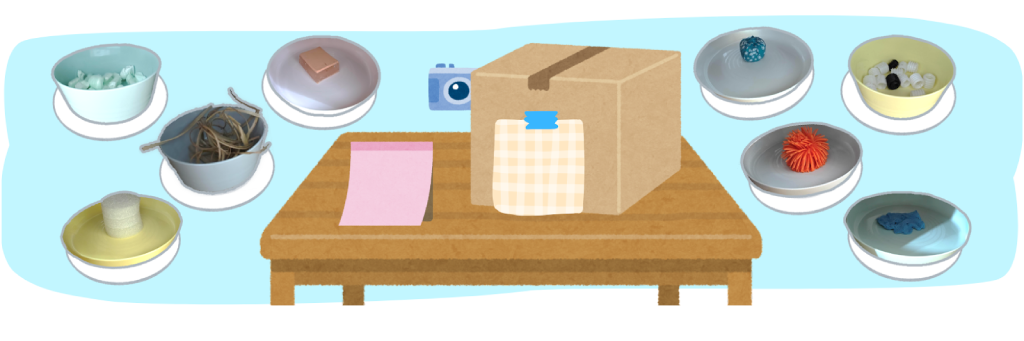
How can we leverage taste expectations to create novel food-based experiences for children? Eating is an embodied process that engages multiple senses. Cross-sensory correspondences may offer educational and recreational opportunities to design interactive applications that encourage diversifying encounters with food. We present a study with 64 children (ages 10-11) who explored eight textured materials hidden inside mystery "food'' boxes and reported both their expected tastes and willingness to eat. Our findings provide evidence of touch–taste cross-sensory correspondences in children - sweetness with weak-hard-brittle and strong-soft-brittle materials, and saltiness with a weak-soft brittle material - and how these mappings influenced children's openness to unknown foods. These results provide empirical grounding for cross-sensory interaction design with children, demonstrating how texture could scaffold curiosity and learning. We outline design implications for cross-sensory food interfaces, non-edible public exhibits, and playful educational technologies that could broaden eating experiences and enable new forms of virtual food interaction.